 |
|
|
|
|
|
|
|
|
|
|
|
|
|
|
|
|
|
|
|
|
Welcome to The Manipulus/Consolatorium Project
|
|
|
|
|
|
|
|
|
|
|
|
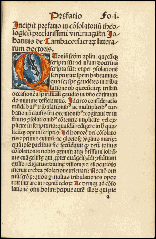
This website provides an Open Access edition of the Consolatorium theologicum (1338-41) of Johannes von Dambach OP (Iohannes de Tambaco). The text was transcribed from the editio princeps printed at Basel in 1492 by J. Amerbach (ISTC ij00437000), employing the open access copy provided by the Universitätsbibliothek Basel.
The purpose of this online edition is to document the author's extensive reception of Thomas of Ireland's influential Latin florilegium, Manipulus florum (1306). The presentation of the text thus includes links to the PDF source documents from The Electronic Manipulus florum Project for all quotations that were surely or probably derived from that florilegium, which was the author's source for many of the quotations in this text.
This project follows the model of two previous websites I developed in 2015-16 to document the reception of Manipulus in two 15th-century texts:
|
|
|
|
|
|
 |
|
|
|
|
|
|
|
|
|
|
|
|
|
|
|
|
- Giovanni Dominici's Lucula noctis (The Manipulus/Lucula noctis Project)
- Walter Bower's Scotichronicon (The Manipulus/Scotichronicon Project).
The major difference between this project and its predecessors is that critical editions of both Lucula noctis and Scotichronicon were published the 20th century, so those websites serve as addenda/corrigenda to those editions, whereas The Manipulus/Consolatorium Project constitutes the first modern edition of the text.
|
|
|
|
|
|
|
|
|
|
|
|
The creation of this website was announced in my recent article on Johannes von Dambach's consolatory writings:
C.L. Nighman, "The Reception of Manipulus florum in Two Distinct Works by Johannes von Dambach OP: Consolatio theologiae and Consolatorium theologicum," Archivum Fratrum Praedicatorum 3.2 (2026): 95-122 at p. 108.
In addition to the full digital edition of Consolatorium that has been provided on this website since December 2024, this website also demonstrates the relationship between Consolatorium (previously known as "Typ I" and "Accingi"), which is by far the most prolific version of the text, with over 100 surviving manuscripts and five printed editions (1492-1506), and the second most prolific version, known as "Typ IV" and "Tres regulae", which survives in over 30 manuscripts and one very rare printed edition. A comparative analysis of Liber 9, cap. 4 demonstrates that Typ IV is an abridged recension of Consolatorium.
|
|
|
|
|
|
|
|
|
|
|
|
 |
|
|
|
|
|
 |
|
|
|
 |